Herbert Arthur Wall, Able Seaman, Royal Navy
His Royal Navy Records state he was born in Weston-super-Mare, Somerset, England on September 9, 1884. According to his son Charles, Herbert was an orphan and told him he never knew who his parents were. [ii] The 1891 Census for Wales lists Herbert Wall as a visitor with the George Thomas Hartland family in Pontypridd, Glamorgan, Wales. I also found a record where at age 11 Herbert went to the Pontypridd Union Cottage Homes at Church Village, Llantwit Vardre, Glamorgan, Wales. Herbert was admitted by George Hartland. The Cottage Homes were opened in 1892 and housed pauper children away from the workhouse. Each ‘cottage’ accommodated around 16 boys or girls plus a house parent. However, according to the Wales Census he is back living with the Hartlands in 1901. During this time he must have apprenticed as a shoemaker since his Naval Records state this as his occupation upon enlisting.
What is most interesting is that in his Royal Navy Record he states his year of birth as 9 Sept1884, however, in subsequent records, he states his year of birth as 1885. The date he enlisted in the Royal Navy was also 9 Sept. 1902. It has been suggested that perhaps this allowed him to join the Navy one year before he was of age. In addition, in subsequent records, he states he was born in Bristol, Somerset, Pontypridd, and Cardiff, Wales. This may suggest that he did not know where he was born or that he learned more as he grew older.
I have found a record for Herbert Arthur Wall, his parents John Wall, a Carpenter and Charlotte Sexton his mother. The registration made by Charlotte states Herbert was born 15th Sept. 1885 in Cardiff, Wales. Since Herbert lived in Wales with the Hartlands, Cardiff seems to be the logical place where he was born. When Edwin Wall, Herbert’s grandson had his Ancestry DNA completed there was a clear relationship between him and the Walls of Wedmore Somerset, England and the Binnings’ of the same area. This suggests that his father was likely John Wall (1845-1890), the son of John Wall (1796-1891) and Janetta Binning (1806-1868). I concluded this by eliminating the other brothers of John Wall and their immigration date or death dates.
John Wall (1845-1890), the assumed father of Herbert, may have left home early because he doesn’t show up in the census records for the family, although his birth record is clear. There is very little verifiable information about his life. His death occurred in 1890. There are a number of John Walls who were servants in the homes of others between 1861 and 1881 who appear to be about the right age. At this time, I cannot find any evidence of a marriage between John Wall and Charlotte Sexton. Perhaps the reason Herbert did know his parentage,was because he was born out of wedlock and at some point he went to live with the Hartland family.
There is little known of Herbert’s childhood, except for his stint in the Cottage Homes, however, his naval records indicate he was 18 years old (probably only 17) when he enlisted in 1902 and that prior to joining the navy he was a shoemaker.[iii] His record describes him as 5’5″, with blue eyes and a “fresh” complexion. No distinguishing marks were recorded. Herbert served on a number of ships and navy cruisers over the years.
Based on his Naval records[iv], Herbert received his basic training on the HMS Impregnable, the Royal Navy training ship located at Devonport. Herbert served on many ships during his service, however, from July 1913 to February 1917 the major part of World War I, he served on the HMS EXMOUTH a fighting ship and part of the 6th Grand Fleet at the outbreak of the war. From April 1916 to February 1917 the EXMOUTH was located in the Mediterranean and South Africa.
His record indicates he transferred to the HMS Redbreast on February 10, 1917, an ” 805 ton fleet messenger. The Exmouth’s log[vi] indicates that 12 ratings and 1 prisoner were transferred to the Redbreast on July 8, 1917. This appears consistent with Herbert’s service record. The HMS Redbreast was torpedoed in the eastern Mediterranean on 15 July 1917. REDBREAST, 15th July 1917, Mediterranean – sunk by German coastal minelayer “UC-38”. Q-ship “Redbreast” (naval fleet messenger, 1,300grt, 1908) was allocated to the Senior Naval Officer Malta for operations as a Special Service ship; her complement and casualties are unknown. Herbert’s naval record indicates he left the Redbreast on 21 July 1917. Since this was a personnel and supply ship it is likely other ships were nearby to facilitate a rescue.
An alternative explanation lies in the term above “Q” ship. Q-ships, also known as Q-boats, decoy vessels, special service ships, or mystery ships, were heavily armed merchant ships with concealed weaponry, designed to lure submarines into making surface attacks. This gave Q-ships the chance to open fire and sink them. The basic ethos of every Q-ship was to be a wolf in sheep’s clothing. Their codename referred to the vessels’ homeport, Queenstown in Ireland. These became known by the Germans as a U-Boot-Falle (“U-boat trap”). A Q-ship would appear to be an easy target, but, in fact, carried hidden armaments. A typical Q-ship might resemble a tramp steamer sailing alone in an area where a U-boat was reported to be operating. By seeming to be a suitable target for the U-boat’s deck gun, a Q-ship might encourage the U-boat captain to make a surface attack rather than use one of his limited number of torpedoes. The Q-ships’ cargoes were light wood (balsa or cork) or wooden caskets, and even if torpedoed they would remain afloat, encouraging the U-boat to surface and sink them with a deck gun. The crew might even pretend to “abandon ship”. Once the U-boat was vulnerable, the Q-ship’s panels would drop to reveal the deck guns, which would immediately open fire. At the same time, the White Ensign, the Royal Navy Flag would be raised. With the element of surprise, a U-boat could be quickly overwhelmed.
Individuals serving on these ships would be seen as merchant seaman. So it is possible that when he was assigned to the Redbreast he was posing as a merchant seaman but was there to destroy U boats. His service on the Redbreast was described in his Naval Record as “superior”. Herbert’s son, Charles told his children that he was a Merchant Seaman during the war, which would also add to the explanation.
Marriage to Ethel Mary Pope
Herbert was age 27 when he married Ethel M. Pope in St. Austell, Cornwall, England on March 14, 1911.[viii] Throughout the war Ethel lived in East Newlyn, Cornwall. Herbert was away from the family for long stretches. Ethel was used to the lonely life of a sailor’s wife. The following dates are from his service record when he was assigned to Vivid or Vivid 1 which is basically an accounting base or nominal ship that one was assigned to when ashore. The Vivid’s indicated accounting bases at Devonport. The record gives us a glimpse at how infrequently he was home with his family from his marriage and that for the majority of the war he was at sea. I am certain when they married that this was not how they imagined the years from 1913-1917 to work out.
- Vivid = February 15 to March 17, 1911 — note he was married on March 14, 1911,
- Vivid I =February 22 to June 30, 1913 — this was just before he shipped out on the Exmouth on July 1, 1913, where he spent the majority of WWI.
- Vivid I = July 22 to September 25, 1917- this followed the sinking of the Redbreast.
- October 18, 1921, to February 9, 1924 – this followed his service on the HMS Tiger until September 26, 1917[ix],
Additionally, Herbert served on the Tiger from September 26, 1917 to October 17, 1921 when he likely spent additional time ashore during this period [x].
Herbert left the Navy and was pensioned in September 1924. The family lived in Newquay with daughter Sylvia born in 1911, Ada in 1920, and Charles, my father-in-law, born in 1923. In 1926 the family left England and arrived in Halifax. The family obtained land near Glassville, New Brunswick, through the Soldier’s Settlement Board. [xi] He again took up the shoemakers trade in New Brunswick. Charles[xii], his son remembers him leaving Glassville on a bicycle riding Saint John to buy leather for making shoes.
Herbert had served in the Great War in the Royal Navy and when the Second World War broke out on September 6, 1939, he joined the Canadian Navy and worked in the canteen in Saint John, NB according to Charles, his son. In 1941 while still enlisted he died of cancer of the liver. He is buried in a military cemetery in Halifax. [xiii]
[i] Letter from Lillian Bambury, daughter of Richard Pope, Devon, Plymouth England. Summer 2000
[iii] Naval Service Record, the PRO, Great Britain
[iv]Copy of Royal Naval Record Able Seaman Herbert Wall, # 214648 Devonport.
[viii] Marriage Certificate 6/10/01
[xi] Conversation with Charles Wall, April 23, 2000.
[xii] Conversation with Charles Wall, April 23, 2000
[xiii] Conversation with Charles Wall, April 23, 2000.
Secondary Sources
The Tiger
Beginning in January 1917, Tiger uneventfully patrolled the North Sea, as both fleets were essentially forbidden to risk any more losses. She provided naval support for British light forces involved in the Second Battle of Heligoland Bight on 17 November 1917, but never came within range of German forces. Wikipedia http://en.wikipedia.org/wiki/HMS_Tiger_(1913) Accessed July 15, 2013
[x] ” ”Tiger” remained in service with the Royal Navy after the Armistice with Germany and she had a flying-off platform added on ‘B’ turret’s roof in 1919. The ship collided with the battleship HMS|Royal Sovereign in late 1920 while assigned to the Atlantic Fleet. “Tiger” survived the culling of older capital ships following the Washington Naval although she was placed in reserve on 22 August 1921. The ship was refitted in March 1922 and on 14 February 1924, ”Tiger” was recommissioned and became a seagoing training ship, a role she served in throughout the 1920s.[x]
Redbreast
Some sites indicate there were no casualties when the Redbreast sank while others state there were 44. This site indicated the number of casualties unknown. http://www.naval-history.net/WW1NavyBritishQships.htm Accessed July 16, 2013.


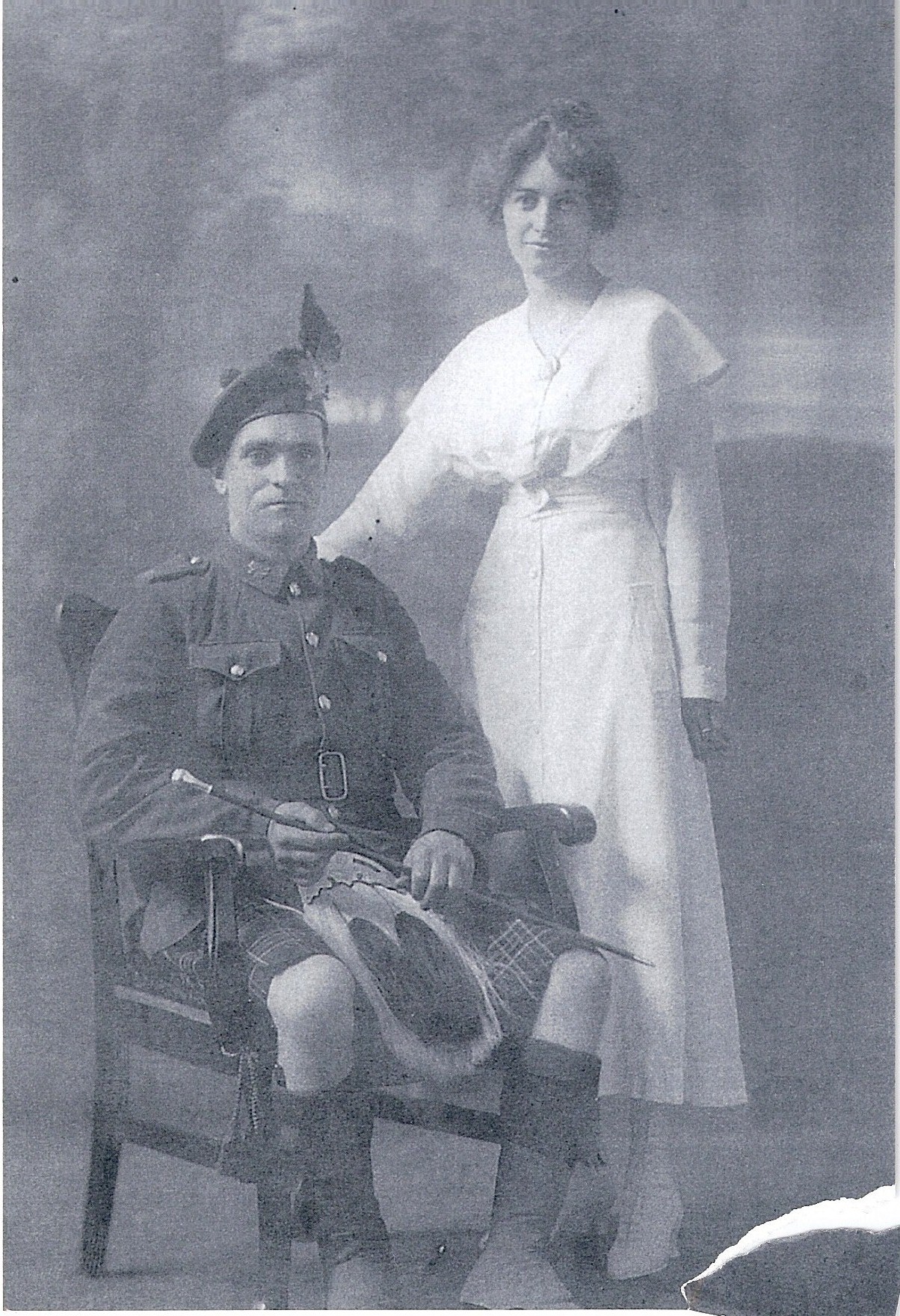
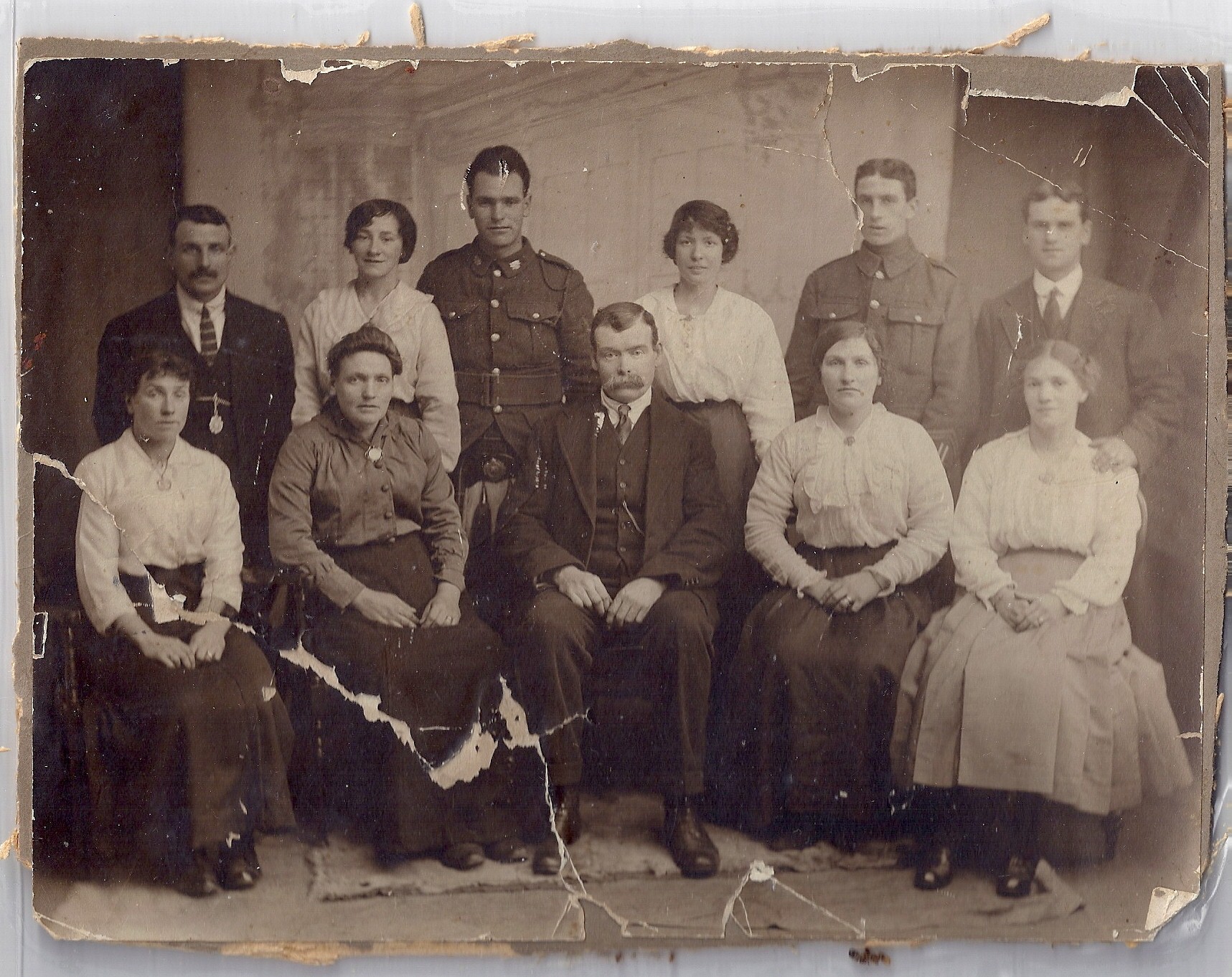


 Tapestry